
Being Effective in Unbelief
Still thoroughly enjoying research leave time at Tyndale House, Cambridge, England.
Doing some translating work today. The following is from a Reformation-era pastor/scholar, one Erasmus Sarcerius. In his commentary on 2 Thessalonians chapter 2, where Reformers spend a lot of time, Sarcerius writes of the evil one:
"The devil is effective in his unbelief."
He is indeed.
- Details
- Written by Brad Green Brad Green
- Category: Recommended Reading Recommended Reading
- Published: 17 July 2017 17 July 2017
- Hits: 2408 2408
Martin Bucer and Liberal Arts Education and Ministry
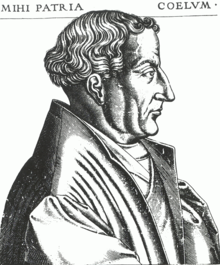
As I sit on work on a project related to the Reformation, I stumbled upon this by Martin Bucer (1491-1551), the Protestant Reformer who would spend time in Strasbourg, Cambridge, and elsewhere. I liked what he had to say about a good liberal arts education, and how it helps someone going into ministry. He writes:
As a sound liberal education in the arts makes a great contribution to understanding, teaching and defending the Scriptures, the Fathers made this too a requirement in ministers and included it in the examination.
I found this in David F. Wright's edited volume, Common Places of Martin Buber, published in 1972. It originally appeared in Bucer's The Restoration of Lawful Ordination for Ministers of the Church.
- Details
- Written by Brad Green Brad Green
- Category: Recommended Reading Recommended Reading
- Published: 04 July 2017 04 July 2017
- Hits: 2705 2705
Revolution and the Recovery of True Education

I suppose like many persons, I have been saddened by seeing the events of late happening at places like Middlebury and Evergreen State College. But if these events surprise or shock you, they should not. We have been living in a revolutionary age for a long time. Hence we should not be surprised when revolutionaries act like revolutionaries. I am sitting in Cambridge, England as I write this. My mind goes to C.S. Lewis' The Abolition of Man, where he famously wrote:
And all the time—such is the tragi-comedy of our situation—we continue to clamour for those very qualities we are rendering impossible. You can hardly open a periodical without coming across the statement that what our civilization needs is more ‘drive’, or dynamism, or self-sacrifice, or ‘creativity’. In a sort of ghastly simplicity we remove the organ and demand the function. We make men without chests and expect of them virtue and enterprise. We laugh at honour and are shocked to find traitors in our midst. We castrate and bid the geldings be fruitful.
I reflected on this classic book a few years ago when there was violent mob activity in England. My reflections are here. The events at Evergreen State, where students effectively "occupied" a small liberal arts college in the state of Washington is striking, if not surprising. One of the most telling things I read is where--when students apparently interrupted a faculty meeting--one of the students said (and I paraphrase): "Are not we doing simply what you have been teaching us to do?" That is: Is not our engagement in the use of force, the breaking of campus rules, and indeed the breaking of law simply an act of faithfulness to how you have shaped and taught us?
Indeed, we make men without chests and expect of them virtue and enterprise.
I am also reminded of what T.S. Eliot said in his classic work, Notes Toward the Definition of Culture. One of the most striking things he argues, in reflecting on his own British culture, is that he is skeptical whether his home country has the intellectual, cultural, indeed religious convictions in place to mount any sort of meaningful resistance to the secularism and barbarism of his day. That is, Eliot was pessimistic. He was pessimistic because he saw--rightly in my view--that the essential issue was ultimately religious. He might not have said it in exactly the following way, but he saw that the struggle was ultimately one of a religious nature. Secularism is and was an ultimately religious set of convictions parading as a "neutral" set of convictions than any rational person could affirm. The Enlightenment again rears its ugly head.
I think the only way to really make sense of our current set of revolutionaries is to grasp that they are driven by an ultimately religious fervor. They are passionately engaged in a kind of holy war against any substantive disagreement with their religious viewpoint. Various conservatives fail--on my reading--to grasp the effectively religious passion and commitment of these contemporary revolutionaries.
And this is a pattern we see often throughout history. During the French Revolution, many of the revolutionaries intentionally used religious symbols (e.g., baptism, Lord's supper), but re-worked them in profane and non-Christian ways. During and after the War Between the States, Lincoln was interpreted in Messianic terms, as a "redeemer" (see here). Having recently visited Nuremberg, Germany, as well as Auschwitz, would any person deny today that Hitler was "worshipped" by many in a perverse way? (Here for a great book on the history of revolutions).
But back to Evergreen State . . . .
As I sit here and study in Cambridge, I am preparing some lectures on Reformation Church History. In preparing a lecture on the background of the Reformation, I have been reading Marcia L. Colish, Medieval Foundations of the Western Intellectual Tradition. In her chapter on the rise of the universities, I was struck by the contrast between (1) educational practice in the medieval university, and (2) our current revolutionaries like Middlebury and Evergreen State. Here is what Colish writes about "disputations" in the medieval university:
Sometimes the disputant would agree to take on any equations that his opponents might care to raise, without prior notice of what they might be, resulting in questions quodlibetales, or questions 'on whatever you want.' Either way, the disputant entertained objections from colleagues who opposed his view. Then, after a brief statement of his own position, he sought to refute each objection in turn, by showing that it was irrelevant or illogically framed, or that it invoked authorities inappositely, or both. The same structure of argument is found in the summer or systematic works of hight medieval scholastics, although the tendency to combine debated questions into a synthetic whole is more typical of thinkers in the twelfth and thirteenth centuries than in the fourteenth century.
Intriguing. There was debate, discussion, points made then counter-points. Folks argued, and criticized. There was a type of order and opportunity for real dicussion. What I suspect students at Middlebury and Evergreen State simply do not know is that they have in effect ceased to be liberal arts colleges in any historically significant or meaningful sense. I suspect they may continue to exist in some form. But what they most certainly are not are liberal arts colleges.
They are rather men without chests, and we should not expect virtue of them.
- Details
- Written by Brad Green Brad Green
- Category: Recommended Reading Recommended Reading
- Published: 02 June 2017 02 June 2017
- Hits: 4318 4318
Stephen Williams on Revelation and Reconciliation
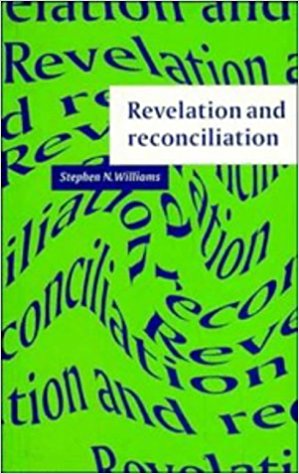
I was helped immensely a number of years ago by Stephen N. Williams' book, Revelation and Reconciliation. It is a real gem. These quotations leaped out and grabbed me:
"Western atheism may be understood as a spiritual movement of the soul as well as intellectual movement of the mind." (p. 8)
"The theology of the Reformers themselves consistently reminds us that the biblical drama is about the tragedy of a world alienated and loved in spiritual rebellion, root of our cognitive dysfunction." (p. 173)
- Details
- Written by Brad Green Brad Green
- Category: Recommended Reading Recommended Reading
- Published: 11 May 2017 11 May 2017
- Hits: 2706 2706